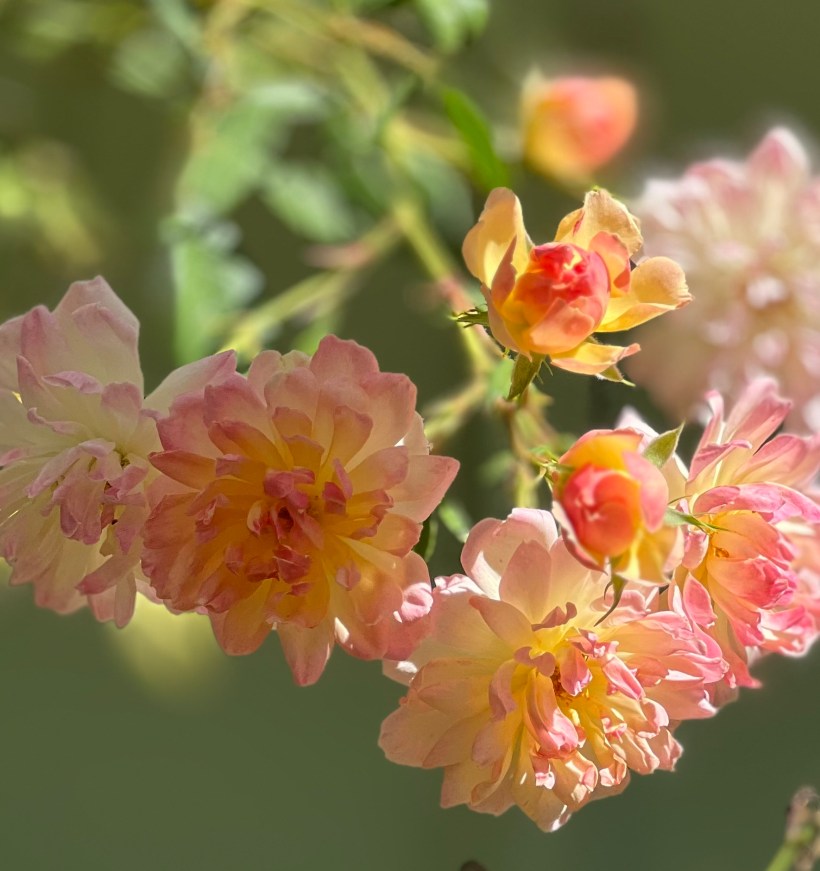
There comes a moment when you realize the love you give to others must be matched by the love you give yourself. This is not a selfish act—it is the very soil in which your well-being grows. Without tending those roots, your empathy can become an open door for harm. But when you nurture your own ground, your compassion deepens, your boundaries strengthen, and you bloom in ways no storm can undo.
It was just a brief talk—about those of us who carry too much empathy—that lit a quiet spark in my mind. From that spark came a deeper contemplation: the nature of accountability, especially in the tender, tangled terrain of intimate relationships.
So often, we long for our partners to “own their part,” to step forward with honesty and humility. But the truth is both humbling and liberating: we can only ever tend to our own part. That doesn’t mean we are always wrong, or that we accept abuse—it simply means that our power lies in choosing when to engage, and how to respond.
For most of my life, I have sincerely endeavored to respond with empathy, even in the difficult deeply challenging moments. That was my compass, my instinct. But what does empathy look like when a partner’s words cut or their hands harm? Is empathy still kindness then—or is it a potentially disastrous form of self-abandonment?
I remember giving more than one partner a pass on his anger because he had revealed to me the deep sorrows of his childhood. Then I gave another pass. And another. Until one day, something inside me broke open and I ended the connection. It felt like the only way to breathe again. I have never regretted those choices. What I have regretted are the painful moments I failed to stand for my own well-being—when I accepted behavior that was not only unpleasant, but dangerous to my body, mind and spirit.
Over time, I’ve learned this: I would rather gather the lessons from a painful experience than cradle the heavy stone of regret. So I began to rewire my inner landscape—upgrading the old operating system of blame and self-reproach into something cleaner, clearer. Something rooted in awareness. The tools are simple and ancient. Meditation, self-reflection and honesty.
I had to learn—deep in my bones—that my well-being is mine to protect. No one else will do it for me, nor would I ask them to. We are each responsible for our actions, even when we can trace them back to the wounds of childhood. Awareness is the first step, always. Without it, accountability has no soil to grow in.
But awareness does not arrive easily. Shame and guilt rise can and will rise like storm clouds, obscuring the view. It can feel unbearable to admit—to ourselves, before anyone else—that we have acted in ways we wish we hadn’t. And yet, there is courage in turning toward that inner mirror with an unflinching gaze, in seeing the whole of ourselves, and in meeting that reflection not with condemnation, but with love. This, my friend, is true freedom.
And maybe that is the quiet miracle: to hold ourselves with the same tenderness we have so freely offered others, to place our own well-being in the center of the garden, and to tend it faithfully. For when we do, our empathy is no longer a doorway for harm—it becomes a light that guides us toward relationships where love and respect can truly take root and flourish.

 Always Choose Love- Give Love Gardens