The Paradox of Vulnerability

The Divine Speaks in Paradox” Robert Johnson

Vulnerability is paradoxical, as what appears at first glance as weakness is actually strength. To be soft, open and undefended, to let the heart remain permeable in a world that rewards armor, this is a profound strength.  It asks us to relax in the unknown without reaching immediately for protection. It asks us to feel what is here, rather than shaping ourselves into something more acceptable, more contained, more controlled. Stepping fully into a paradox takes courage, and yet, it may be the  place where we truly find ourselves.

I have experienced that there is a moment just before we choose vulnerability when the body hesitates, bracing for the blow. The chest tightens, the mind flickers with an old strategy: withdraw, defend, explain, diminish. These movements are familiar, we imagine that  they have kept us safe, or at least safe enough. And in this moment if we stay, the breath returns, the heart begins to open and beneath the tension something else stirs, a more powerful remembering.

This is what it can feel like to be fully alive. To say, “this hurt me,” without armor.
To admit “I don’t know.” To allow another to see the places in us that are tender, unfinished, still becoming. This is not weakness. This is participation in life.

The path that appears easier, the path of holding back, of guarding the heart, of carefully managing how we are seen, is quietly exhausting. It asks us to override our actual instinct again and again. What it really asks is for us to silence truth in favor of comfort, to perform instead of inhabit, to trade aliveness for a sense of control that never quite settles.

While this often happens in our relationships, it’s also experienced in the structures we’ve come to accept as normal. Rigid schedules,endless productivity and the all-too- familiar expectation that we should function like machines rather than living beings with rhythms, sensitivities, and seasons. Even something as ordinary as the eight-hour workday, five days a week, asks us, subtly but persistently, to ignore our natural flow.

TThen there is the true cost of this repression- the body tightens,  the spirit dulls, the heart learns to speak more quietly, until sometimes we can barely hear it at all. It’s likely that this is one of the roots of depression that is so pervasive in today’s world.

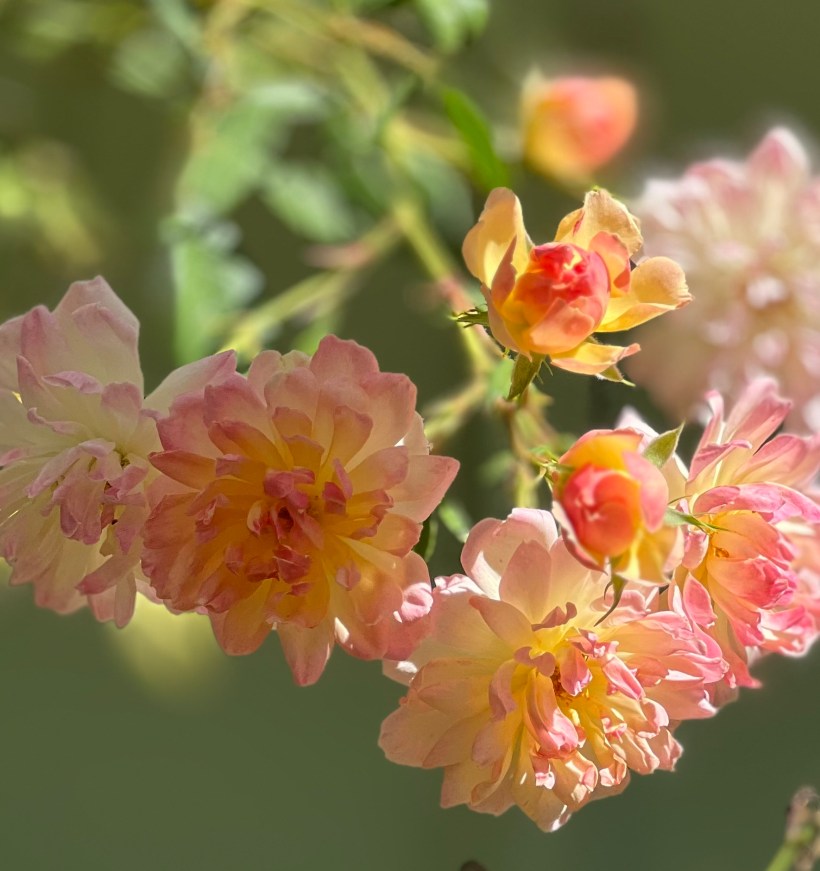
This process is perfectly illuminated in the plant world.  A seed does not remain intact in order to stay safe, it splits open. What appears to be its undoing is, in truth, its becoming. As a tender shoot emerges, fragile and green, it reaches upward without guarantee. It does not wait until conditions are perfect. It does not protect itself into stagnation. It grows.And then, eventually, possibly,  the bloom, and finally, the fruit grows, drops seeds and so the cycle begins again.  The blossom opens fully, offering its color, its fragrance, its nectar, it’s intrinsic knowing that in some way this openness is both its purpose and its risk. The petals will not last. The form will change. And still, the flower does not withhold itself.  

Nature does not confuse vulnerability with weakness. It understands that openness is the very essence of life.  Energy moves and creates… We, too, are part of this same intelligence. When we allow ourselves to be seen, to be moved, to be touched by what is here, we are not stepping into danger as much as we are stepping into alignment. Something relaxes. The effort to maintain a constructed self begins to dissolve.

And here is the deeper paradox:

Courage, which we imagine to be difficult, is truly the easier path.

Because truth, once spoken, does not require constant maintenance.
Openness, once allowed, does not demand endless effort to sustain.
Aliveness, once welcomed, frees our energy to live life more fully.It is the holding back that is heavy. It is the guarding, the managing, the shaping of self that drains us.

To live vulnerably is not to live without boundaries or discernment. It is not to collapse into every feeling or to abandon care. Rather, it is to remain in relationship with what is real—to meet life as it unfolds, instead of retreating from it. It is to trust that the trembling we feel is not a sign of weakness, but of crossing a threshold.

Again and again, life invites us to this edge. In a conversation where honesty would be easier than politeness. In a moment where tears arise unbidden.
In the quiet knowing that something within us wants to be expressed, even if we cannot yet name it. We can turn away. Or we can stay.

And in staying, we begin to discover something unexpected:
that the strength we have been searching for is already present within the very softness we feared. So perhaps the question is not how to be less vulnerable.
Perhaps the question is how to trust it. We can learn how to lean, gently, into the places that feel most exposed. How to honor the body’s hesitation without obeying it completely. How to remember that we are not meant to live sealed off from life, but in conversation with it.

Like the garden, we are always in the process of opening.

And like the garden, we are strongest when we do. 🌿

When Kindness Becomes Self-Abandonment


There comes a moment when you realize the love you give to others must be matched by the love you give yourself. This is not a selfish act—it is the very soil in which your well-being grows. Without tending those roots, your empathy can become an open door for harm. But when you nurture your own ground, your compassion deepens, your boundaries strengthen, and you bloom in ways no storm can undo.

It was just a brief talk—about those of us who carry too much empathy—that lit a quiet spark in my mind. From that spark came a deeper contemplation: the nature of accountability, especially in the tender, tangled terrain of intimate relationships.

So often, we long for our partners to “own their part,” to step forward with honesty and humility. But the truth is both humbling and liberating: we can only ever tend to our own part. That doesn’t mean we are always wrong, or that we accept abuse—it simply means that our power lies in choosing when to engage, and how to respond.

For most of my life, I have sincerely endeavored to respond with empathy, even in the difficult deeply challenging moments. That was my compass, my instinct. But what does empathy look like when a partner’s words cut or their hands harm? Is empathy still kindness then—or is it a potentially disastrous form of self-abandonment?

I remember giving more than one partner a pass on his anger because he had revealed to me the deep sorrows of his childhood. Then I gave another pass. And another. Until one day, something inside me broke open and I ended the connection. It felt like the only way to breathe again. I have never regretted those choices. What I have regretted are the painful moments I failed to stand for my own well-being—when I accepted behavior that was not only unpleasant, but dangerous to my body, mind and spirit.

Over time, I’ve learned this: I would rather gather the lessons from a painful experience than cradle the heavy stone of regret. So I began to rewire my inner landscape—upgrading the old operating system of blame and self-reproach into something cleaner, clearer. Something rooted in awareness. The tools are simple and ancient. Meditation, self-reflection and honesty.

I had to learn—deep in my bones—that my well-being is mine to protect. No one else will do it for me, nor would I ask them to. We are each responsible for our actions, even when we can trace them back to the wounds of childhood. Awareness is the first step, always. Without it, accountability has no soil to grow in.

But awareness does not arrive easily. Shame and guilt rise can and will rise like storm clouds, obscuring the view. It can feel unbearable to admit—to ourselves, before anyone else—that we have acted in ways we wish we hadn’t. And yet, there is courage in turning toward that inner mirror with an unflinching gaze, in seeing the whole of ourselves, and in meeting that reflection not with condemnation, but with love. This, my friend, is true freedom.

And maybe that is the quiet miracle: to hold ourselves with the same tenderness we have so freely offered others, to place our own well-being in the center of the garden, and to tend it faithfully. For when we do, our empathy is no longer a doorway for harm—it becomes a light that guides us toward relationships where love and respect can truly take root and flourish.

Turn All of Your Obstacles into Your Superpowers – Jai Ganesha

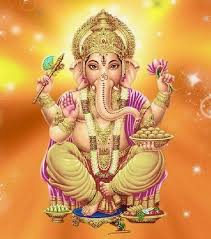
Ganesha, the Hindu elephant God is revered as the remover of obstacles, among other things.  The mythology that surrounds him is varied, and the messages within it as well, but one day, while chanting a Sanskrit mantra devoted to the worship of Ganesha I saw it clearly – he made the most of his larger than life-sized obstacle, namely wearing the head of an elephant and turned that to such good purpose that he was deified.  It catapulted him into the realm of the Gods.   He’s also quite tubby, a quality that is not often respected by mortal humans, instead it is considered a sign of weakness.  However, in this case it simply increases his adorability manyfold!  Jai Ganesha!  We love you!

How does this relate to our lives and what can we learn from it?  It would certainly be considered a tragedy of epic proportion to live with the head of an elephant on a human body.  Who remembers the movie, “Elephant Man” where the deformed man is hidden away from sight but does eventually learn to use his handicap as his strength, not as fully as Ganesha, but we mere mortals take smaller steps apparently.  It is through joy, acceptance and  complete embracing of our obstacles that they take us to the next level.

Understand that I do not want to diminish the magnitude of this challenge.  It is perhaps one of the greatest challenges we have as humans living this life on earth.  So many regular and ordinary occurrences are uncomfortable or unpleasant, and our mind usually goes on to tell us “undesirable”.  If we can learn to corral this impulse, to catch it before it blossoms fully into our mind, then we have taken a giant step towards realizing freedom, and regaining our true power.

Freedom isn’t just about walking where we want to walk or choosing a college or career, that is one a kind of freedom.  But freedom from the suffering, and bondage of the conditioned mind, that is true freedom.  There don’t seem to be any effective shortcuts to this exalted destination. It requires sincerity, willingness, devotion, pure hearted words and actions, and lots of quiet time in inner space. There is no telling how such a choice will begin to influence your life, but there really is no other pursuit as worthy. It’s not necessary to believe me or take my word for anything but consider that any wisdom worth its salt is verifiable through direct experience. If you have received the call there is only one choice (no choice, actually) – Go for it!

What happens next is anybody’s guess but what has been referred to as a “dramatic shift in awareness” is highly likely. Sincerity, intention, meditation and voila – life on earth transforms and transmutes into new dimensions of wondrousness and miraculous events become commonplace.

What are you waiting for? True liberation is seeing that each so-called obstacle is a helper, a support, a portal to living in a better way. Facing our challenges directly while learning to return to love rewards us with profound experiences and deeply experienced emotions. Emotions are often evaded, our addictions point directly to the inability to face and feel our feelings – as many of them are sincerely uncomfortable and craving comfort is a common response to life.

It’s also increasingly apparent that our addictions point directly to self abandonment. When we are unable to make healthy choices in life, it is a kind of self abuse. What is the healing for this? Clearly it is self love, and self respect, since we don’t abuse those we respect. It’s a big step towards acquiring the superpowers that can blossom from our seemingly undesired hindrances. Embracing the mystery, pondering every paradox and always always returning to love… might also be called the stairway to heaven…