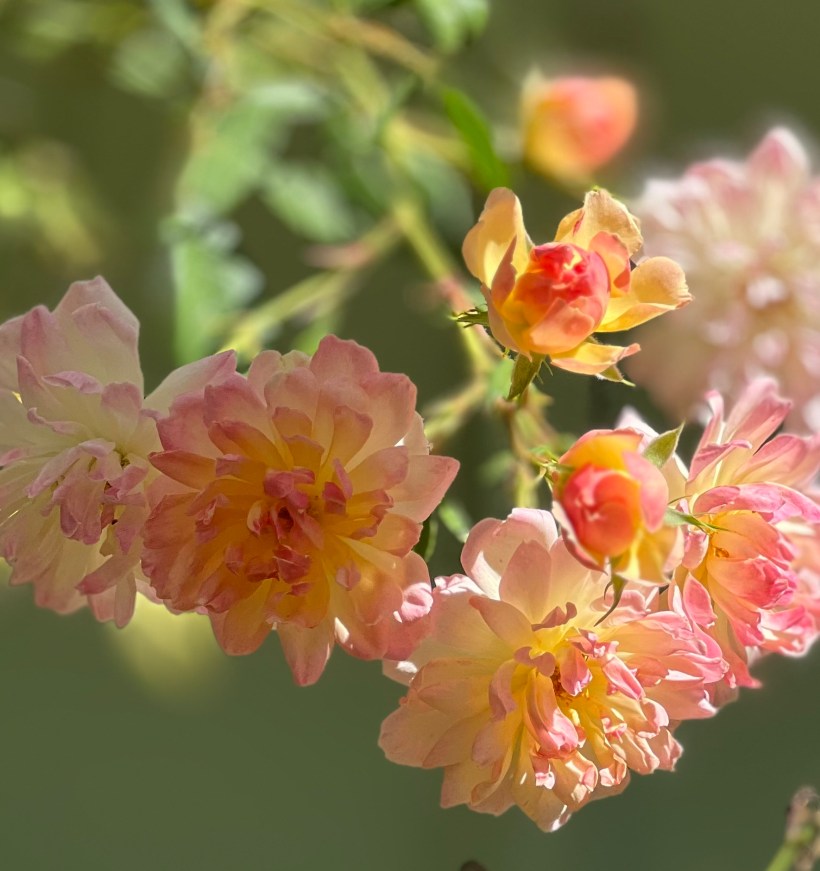
When Kindness Becomes Self-Abandonment


There comes a moment when you realize the love you give to others must be matched by the love you give yourself. This is not a selfish act—it is the very soil in which your well-being grows. Without tending those roots, your empathy can become an open door for harm. But when you nurture your own ground, your compassion deepens, your boundaries strengthen, and you bloom in ways no storm can undo.

It was just a brief talk—about those of us who carry too much empathy—that lit a quiet spark in my mind. From that spark came a deeper contemplation: the nature of accountability, especially in the tender, tangled terrain of intimate relationships.

So often, we long for our partners to “own their part,” to step forward with honesty and humility. But the truth is both humbling and liberating: we can only ever tend to our own part. That doesn’t mean we are always wrong, or that we accept abuse—it simply means that our power lies in choosing when to engage, and how to respond.

For most of my life, I have sincerely endeavored to respond with empathy, even in the difficult deeply challenging moments. That was my compass, my instinct. But what does empathy look like when a partner’s words cut or their hands harm? Is empathy still kindness then—or is it a potentially disastrous form of self-abandonment?

I remember giving more than one partner a pass on his anger because he had revealed to me the deep sorrows of his childhood. Then I gave another pass. And another. Until one day, something inside me broke open and I ended the connection. It felt like the only way to breathe again. I have never regretted those choices. What I have regretted are the painful moments I failed to stand for my own well-being—when I accepted behavior that was not only unpleasant, but dangerous to my body, mind and spirit.

Over time, I’ve learned this: I would rather gather the lessons from a painful experience than cradle the heavy stone of regret. So I began to rewire my inner landscape—upgrading the old operating system of blame and self-reproach into something cleaner, clearer. Something rooted in awareness. The tools are simple and ancient. Meditation, self-reflection and honesty.

I had to learn—deep in my bones—that my well-being is mine to protect. No one else will do it for me, nor would I ask them to. We are each responsible for our actions, even when we can trace them back to the wounds of childhood. Awareness is the first step, always. Without it, accountability has no soil to grow in.

But awareness does not arrive easily. Shame and guilt rise can and will rise like storm clouds, obscuring the view. It can feel unbearable to admit—to ourselves, before anyone else—that we have acted in ways we wish we hadn’t. And yet, there is courage in turning toward that inner mirror with an unflinching gaze, in seeing the whole of ourselves, and in meeting that reflection not with condemnation, but with love. This, my friend, is true freedom.

And maybe that is the quiet miracle: to hold ourselves with the same tenderness we have so freely offered others, to place our own well-being in the center of the garden, and to tend it faithfully. For when we do, our empathy is no longer a doorway for harm—it becomes a light that guides us toward relationships where love and respect can truly take root and flourish.
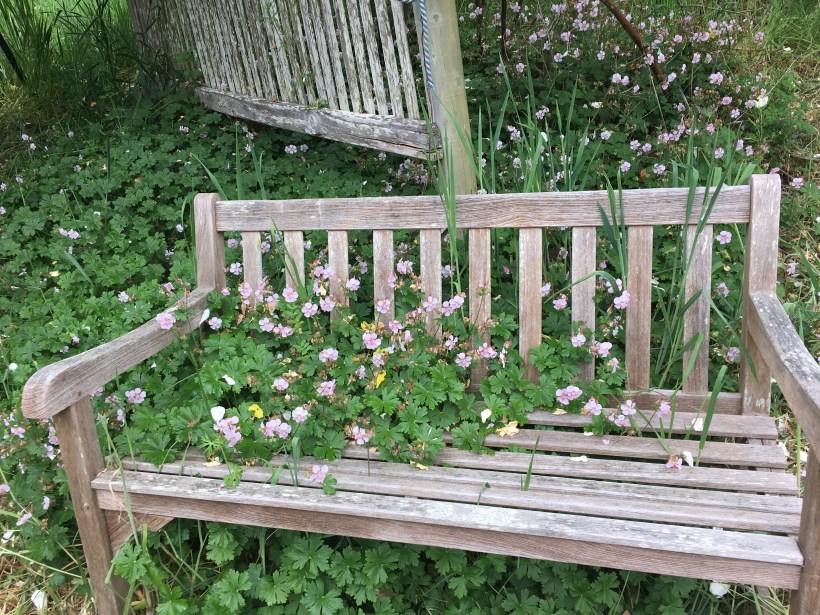
Learn to Discern, Choose Love

“Love calls – everywhere and always.
We’re sky bound.
Are you coming?”

–Rumi

Learning to choose Love, is to me the most important aspect of life.  It’s an ongoing process – a spiral dance, a vision quest a grand education. And in the choosing lies the question – what exactly is this thing called love?  The English language is to me, woefully inadequate to describe Love.  Other languages have many words because there are many meanings and faces of love in its expression.  For now I’m speaking of the universal love that is the compelling energy of this world.  Romance can be delightful, but couple-love is by nature limited (only two allowed) and love with a capital “L” is unlimited, limitless and universal.

It’s not actually a choice, to love.  It is innate in us and to love we must retrain our minds to follow that track,  using our heart’s truest wisdom to guide the way.  We all have a built in tool for finding our way – it’s called our intuition.  Some call it “gut feeling”.  Our minds and deep conditioning can get in the way of this deep inner knowing and there are some big obstacles to deeper listening, but this capability exists in everyone, I’m sure of that.

During these days of the corona virus as the world has quieted, our activities are limited and we are essentially confined it is more important than ever to focus on deep inner listening. What is the feeling when we know ourselves to be acting in opposition to our own innate wisdom?  Where is it felt in the body? Noticing some physical discomfort is often a great starting point for finding the way.

Choosing love doesn’t mean allowing others to mistreat or take advantage of us.  In the face of anger or abuse there is an important need for self care.  Most times the best solution is to remove ourselves from harm’s way, verbal or physical.  The most successful strategy I have found is to use a kind of energetic aikido and relax into the truth that nothing other people say or do is really about us.  It is a reflection of their own inner state, their judgements which they believe to be true, and their conditioning and trauma.  Choosing love in intense situations can mean quietly exiting the arena of conflict, at best leaving a feeling of compassion behind.

Since we’re talking about compassion, it’s another term that calls for clarification.  Pema Chodron, a Buddhist wise woman calls certain behaviors “idiot compassion”.  She explains it this way:  “It refers to something we all do a lot of and call it compassion. In some ways, it’s what’s called enabling. It’s the general tendency to give people what they want because you can’t bear to see them suffering.”  This one is seen a lot with small children, whose parents give in to their tears and tantrums.  This doesn’t work out so well in the long run, as many adults attempt this same kind of emotional manipulation in adulthood- and it doesn’t usually work out very well on either side.

True compassion is felt in the heart.  It is warm and fuzzy and can also hold tinges of sadness for another’s suffering.  We can’t truly assuage the suffering of others, but by holding them in compassion and love we can lend emotional support which is in many ways one of the most valuable offerings we can make to each other.  These days we may be limited to reaching out by phone, and as hugging has become dangerous most of our connections are virtual, and yet that is opening a door to creativity.  How do I express my love in new ways…please let me know what you have discovered!

Circling back to the best way to be a helper in this time of confinement due to Covid-19, having compassion for ourselves and others, putting the others who are sharing our homes is at the top of the list.  Learning to deepen the ways we express our love to each other is essential and important.  Taking responsibility for our own hurtful behaviors can work wonders on our relationships and is truly the higher path.   Every time we notice ourselves veer off the path of love and compassion, healing happens and we can stand up, brush off and re-enter the realms of love and joy.  Welcome home!


IMG_2037.jpeg