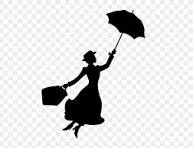
Sometimes, our earliest teachers come in the form of stories.
Sometimes, they arrive on the wind.
May we all remember the magic that hums beneath the surface of our ordinary days —
and may we have the courage to fly when the wind invites us onward.
As my life has unfolded in ways no suburban child could have imagined, I have found myself drawn again and again to those who walk between worlds — shamanic healers from distant countries and ancient traditions. My mind delights in the threads that weave them together: songs that heal, prayers whispered to the wind, and the steadfast belief that the seen and unseen are in constant conversation.
The word shaman itself is rooted in the frozen soils of Siberia, long before it drifted into our shared language. To my ear, it hums in harmony with other sacred words: curandera from the heartlands of Mexico and Central America, or mystic in English — each describing one who listens for what others cannot hear, one who knows that the veil between worlds is thin.
When I look back across the winding path of my life, tracing the first seeds of my fascination with mysticism, I find — to my surprise — that Mary Poppins was one of my earliest teachers.
Yes, Mary Poppins! A Disney character! An English nanny with impeccable posture and an umbrella that talks!
And yet — magic often hides in plain sight.
Her first appearance gives it away. She descends from the heavens, riding the wind, a talking parrot perched upon the handle of her black umbrella. She tucks that impossible object neatly into her carpetbag — a container that, like the shaman’s bundle, holds far more than it seems. The air shimmers. The children are spellbound. The adults, entranced by their own routines, fail to notice.
In that, Mary Poppins reveals a core truth of the shamanic path: those who are meant to see, will see. Those who are ready, will recognize the medicine. The rest continue on, unaware that the miraculous has just walked through the door.
Mary sings her spells. She teaches through vibration and joy — a spoonful of sugar to help the medicine of awakening go down. Her songs are incantations: Supercalifragilisticexpialidocious, I Love to Laugh, each one a doorway to altered consciousness. Through rhythm and laughter, she raises the vibration of those in her care.
Then, as true shamans do, she opens the way between worlds. Hand in hand, she and the children leap into a chalk drawing on the sidewalk, entering another realm altogether — a place where color, play, and delight reign supreme. They meet a man who teaches them that laughter can lift not just spirits but bodies. They learn that joy itself is a portal to freedom.
Through her mysterious ways, Mary Poppins midwifes transformation. A small boy’s wish to feed the birds becomes the spark that topples rigidity and awakens compassion. The true healing that unfolds is not just in the boy or his father but in the entire family — hearts reunited, love restored, values reborn.
And when her sacred work is done, the wind shifts.
Mary feels it in her bones.
Without fanfare, she opens her umbrella, rises into the sky, and sails away — as all true healers must — toward the next soul in need of remembering.
This is the essence of shamanic healing: invisible, profound, devoted to love. It is not about spectacle; it is about restoration — the mending of what has been forgotten, the rekindling of joy, the return of wonder.
The final scenes of Mary Poppins show a family realigned with truth, walking hand in hand beneath the open sky. The spell is complete.
I will forever be grateful to Mary Poppins — and to those who brought her magic to life, P. L. Travers and Walt Disney. Through her, a doorway opened in my young suburban heart, revealing that enchantment is real, that laughter can heal, and that love — always — is the deepest medicine.
 Always Choose Love- Give Love Gardens